
"Central America coffee"
5000 article(s) found

A brief introduction to the Market Price of Fine Coffee Bean varieties in Los Congo Manor in Central America
Beautiful sour taste, moderate mellow Nicaraguan coffee belongs to the Central and South American style coffee, although the acidity is not very high, but it feels refreshing. The mellow degree is also not high, but the overall feeling is just right, neither thin nor too strong. To make it easier to accept. The taste of red wine can be vaguely felt in the shallow sour taste, which is also a major feature of Nicaraguan coffee.

El Salvador Hot Spring Coffee the smallest country in Central America
El Salvador, with its upland topography, is the smallest country in Central America, flanked by Guatemala and Honduras. Because there are two parallel mountains in the country, the volcanic soil is rich in minerals, and this special geographical environment makes El Salvador suitable for growing coffee. The coffee tree in El Salvador is Arabica, mainly Bourbon and Pacas.

Blue Mountain Coffee in the Blue Mountain region of Central America and Jamaica
Blue Mountain Coffee (Blue Mountain Coffee) is a kind of coffee with high public awareness, which is produced only in the Blue Mountain region of Jamaica in Central America, and only coffee grown in the Blue Mountain area above 1800 meters can be authorized to use the logo of Jamaican Blue Mountain Coffee (Blue Mountain Coffee), accounting for 15% of the total production of Jamaica Blue Mountain Coffee. And planted between 457m and 1524 meters above sea level
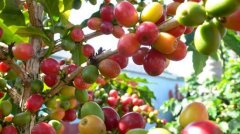
Martinique coffee beans are also the birthplace of coffee in Central America.
Martinique is a small island and the birthplace of coffee in Central America, but it produces very little coffee today. The first coffee tree in the Western Hemisphere was brought from France by GabrielMathieudeClieu in the early 1820s. In his early years, Dirkley was a naval officer in Martinique. He brought back a coffee tree and planted it in Pritchell.

Martinique is an island and the birthplace of coffee in Central America.
Martinique is a small island and the birthplace of coffee in Central America, but it produces very little coffee today. The first coffee tree in the Western Hemisphere was brought from France by GabrielMathieudeClieu in the early 1820s. In his early years, Dirkley was a naval officer in Martinique. He brought back a coffee tree and planted it in Pritchell.
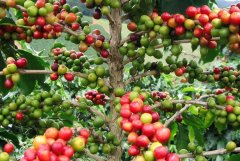
Martinique is an island and the birthplace of coffee in Central America.
Martinique is a small island and the birthplace of coffee in Central America, but it produces very little coffee today. The first coffee tree in the Western Hemisphere was brought from France by GabrielMathieudeClieu in the early 1820s. In his early years, Dirkley was a naval officer in Martinique. He brought back a coffee tree and planted it in Pritchell.

Martinique is a small island and the birthplace of coffee in Central America.
Martinique is a small island and the birthplace of coffee in Central America, but it produces very little coffee today. The first coffee tree in the Western Hemisphere was brought from France by GabrielMathieudeClieu in the early 1820s. In his early years, Dirkley was a naval officer in Martinique. He brought back a coffee tree and planted it in Pritchell.
Taiwan helps Central America fight Coffee Diseases
Tao Wenlong, secretary-general of the Foundation for International Cooperation and Development, signed a memorandum of understanding with the general manager of the Central American Economic Integration Bank on the 5th to assist in the coffee rust loan project in the Central American region. Dozens of people, including Ambassador of the Republic of China to Honduras Guo Yongliang, Minister of Agriculture and Animal Husbandry of Honduras Jacobo Regalado, coffee industry leaders and government officials, attended the ceremony.

Coffee Network recommends Ataisi Manor in El Salvador, America, micro-batch washing Pacamara Pacamara.
El Salvador is located in Central America, bordered by Guatemala and Honduras in the north, and the Pacific coastline in the west and south. El Salvador is the smallest country in Central America and the most densely populated country in Central America. Although the territory of El Salvador is small, it has dozens of volcanoes. It is the country with the highest density of volcanoes in the world, so it is called the country of volcanoes. Full

Do American coffee beans represent that there are many coffee-growing places in America? evaluation of Central and South American Coffee
Professional Coffee knowledge Exchange more information about coffee beans Please follow the coffee workshop (official Wechat account cafe_style) every morning, millions of people around the world like to have a cup of coffee to start the day. In doing so, they may not know the exact location of the beans used to produce lattes or black coffee. Generally speaking, the top coffee growing and exporting regions in the world

Description of Latin American coffee flavor, introduction of Latin American coffee
The characteristics of the flavor of Central and South America: balanced, moderately sour and mellow Central and South America is the world's largest coffee producing area, where there are numerous boutique coffees. Take Colombia, Guatemala or Brazil as an example, good coffee is enough to make people dazzling. What is the resource advantage that makes Central and South America so good? French naval officer Gabriel Ma in 1721

Introduction to the basic knowledge of Coffee Coffee Machine Heat Exchange Boiler
● Mexico (Central America), the main coffee producer in Central America, has a comfortable taste and charming aroma. The Mexican coffees selected are Coatepec, Huatusco and Orizaba, among which Cottpe is considered to be one of the best in the world. The coffee cultivation belt of this country, regardless of geographical or climatic conditions, is related to

The Coscarpa region of El Salvador, a small coffee-producing country in Central America
It is one of the small countries in Central America with a very dense population. People here love coffee. The coffee in El Salvador tastes well balanced. Salvadoran coffee exports account for 40% of the country's exports. The best quality coffee is exported from January to March each year, and 35% of the extra hard beans are exported to Germany. In the early 1990s, due to the impact of the war, El Salvador's national economy

Coffee in Central America introduces the name and cultivation of coffee producing areas in seven countries.
For professional baristas, please follow the Coffee Workshop (official Wechat account cafe_style) 200Coffee School the land bridge between Central America and North and South America, there are seven countries: Belize, Costa Rica, El Salvador, Guatemala, Honduras, Nicaragua and Panama. Coffee is produced in seven Central American countries, including Guatemala, Costa Rica and Honduras.

Nicaragua, the poorest coffee-producing country in Central America, the flavor and taste manor of the coffee-producing area introduces Happy Village.
Nicaragua is now one of the poorest countries in Central America. Due to its poor economic foundation, the coffee industry is still relatively backward, while coffee farmers are in extreme poverty. Fortunately, Nicaraguan coffee has received some foreign aid funds to improve the quality of its coffee. Coffee from Madagelba, Sinodega and Segovia in Nicaragua
El Salvador, a coffee producer in Central America with a mild taste.
Unique, mild-tasting coffee. El Salvador is one of the small countries in Central America with a dense population. The flavor of its coffee is characterized by excellent balance. Today, this coffee accounts for 40% of the country's exports. 35% of the extra hard beans of the best coffee are exported to Germany from January to March. In the early 1990s, the guerrilla war greatly damaged the country's national classics.

IMPCT coffee concept hall helps children in Central and South America flip education
Professional barista exchanges, please pay attention to coffee workshop (Weixin Official Accounts cafe_style ) IMPCT opens its first coffee concept hall in Taiwan, and the proceeds will be used to cover kindergartens in Central and South America. Global coffee consumption has been rising in recent years, but farmers in many coffee-producing countries remain below the poverty line and have not benefited from increased coffee consumption.
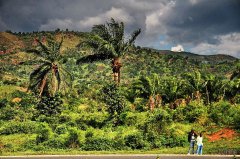
Nicaragua SHG boutique coffee beans the most classic flavor of coffee from Matagalpa, Central America.
Like most Central American coffee-producing countries, Nicaragua grows very well, with most high-end coffee beans coming from high-altitude estates, and these beans represent SHG grade (Strictly High Grown). Most of Nicaragua grows traditional coffee varieties, such as Tibica, bourbon, National Treasure Coffee, etc., as well as some Caturra coffee trees.
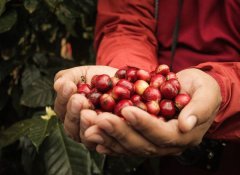
Costa Rica where coffee beans are grown in Central and South America.
Costa Rican coffee cultivation was introduced by Cuba in 1779 and exported for the first time in 1820. There are about 32000 coffee farmers, with an average planting area of less than one hectare (10000 hectares) per farmer. Costa Rica has a population of 41 billion (2006), with a coffee planting area of 82500 hectares and an annual production of 1.7 million bags (60kgs per bag). The annual domestic consumption is 380000 bags.

Coffee flavor of Tianqi Manor in Matagalpa, Nicaragua, central Central America.
When tasting Nicaraguan coffee, it is best to drink cold water first, so that you can better feel its mellow taste. Drink coffee while it is hot, because the tannins in Nicaraguan coffee are easy to change during cooling, and the taste becomes sour, which will affect the flavor of the coffee. You can add the right amount of sugar, and then add cream. Enjoy a cup of high quality Niga